Shipboard burial procedure
The EmigrantsThe shipboard burial procedure is the Charlotta’s formal method for committing a deceased passenger to the sea. Set out in a prayerbook section titled “How to Bury a Corpse on Board,” it brings the captain, crew, and emigrants together for a ritual that pauses the ship’s progress, gives the dead a communal farewell, and places Swedish soil between the body and the ocean. Its prescribed prayers and gestures are practical observance, but the scene also reveals the emotional and religious strain of a voyage from which the emigrants cannot simply turn back.
Purpose and Setting
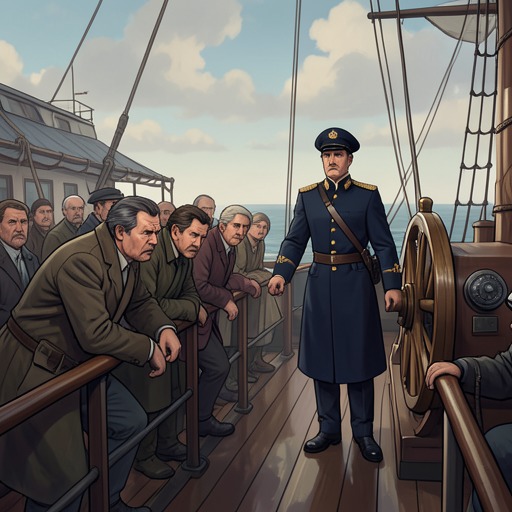
The ceremony takes place aboard the brig Charlotta during its 1850 passage from Karlshamn to New York. The ship had sailed on April 14 carrying 78 emigrants among a total of 94 people, and the burial occurs after earlier deaths have made this the eighth funeral of the voyage. The ritual is therefore not an abstract rule: it is repeated shipboard work within a crowded migration passage, where the dead must be mourned and buried at sea.
The prescribed service gives the captain a defined role. He must select appropriate prayers and hymns from the prayerbook, including a passage from Scripture, and conduct the funeral according to the instructions for burying a corpse aboard ship. The rite organizes a solemn gathering on the afterdeck; it also requires the vessel’s movement and crew to accommodate the burial.
Preparing the Funeral
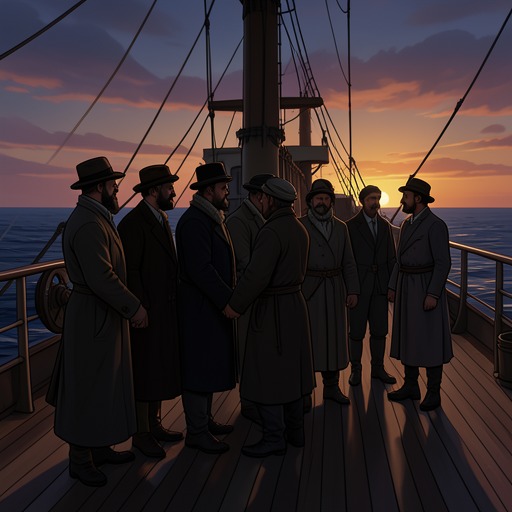
The passengers gather around an improvised bier made from planks laid across two low sawhorses. The body is wrapped in canvas, and the emigrants wear their Sunday clothes. The Charlotta’s flag is lowered to half-mast. Captain Lorentz orders the mainsail braced so that the brig slows almost to a standstill, delaying the voyage for the funeral while retaining just enough way for steering.
Lorentz changes from his oilskins into a black redingote and brings out his prayerbook. His difficulty finding the correct page makes the written procedure visible as a working instruction, not a seamless ceremony: he turns pages back and forth and remembers that he should have marked the section. The moment preserves both the authority of the office and the fallibility of the person performing it. The ritual depends on practical preparation as well as solemn intent.
Prayer, Hymn, and Swedish Earth
Once he finds the service, Lorentz reads aloud from the prayerbook. The congregation bows and listens as he asks God to teach them to remember death and gain understanding. He then leads a hymn; its first stanza begins haltingly, with the captain singing part of it alone before the passengers gradually join him. Prayer and singing make the funeral a shared act, even as grief remains unevenly expressed among the gathered people.
A wooden bushel measure half-filled with earth stands beside the bier, with a small scoop in it. Three times Lorentz lifts Swedish soil and empties it over the canvas-wrapped body. He then speaks the words, “Dust thou art, to dust thou shalt return. Jesus Christ shall awaken thee on the Day of Judgment! Let us pray.” The three deposits make the homeland materially present at the point of burial: soil carried across the ocean is used to mark the dead before the sea takes the body. Some of the loose earth slides off the canvas and over the rail, so even this token of home partly enters the water with the deceased.
Danjel’s Farewell and the Voyage Resumes
After the formal service, Danjel Andreasson steps forward with his baby in his arms and the couple’s three other children beside him. Captain Lorentz yields the head of the bier to the surviving husband. Danjel addresses his wife as someone who had followed him in life and now reached the harbor before the emigrants reached the new land. His words connect the funeral to their shared decision to leave and to the promise she had made not to separate from him. The prescribed rite allows this personal farewell to follow the captain’s public prayer.
Danjel steps back, and two seamen lower the canvas-wrapped body into the sea. The ship’s flag is raised and lowered three times. The passengers disperse; the crew dismantles the bier, removes its planks and sawhorses, and the mainsail is spread again. The ceremony ends not in arrival but in resumed passage: the Charlotta sails on with one passenger less. Its careful sequence of prayer, hymn, Swedish earth, family farewell, and lowering of the body gives the emigrants a form for mourning, while the ship’s return to motion underscores the harsh condition that makes the rite necessary.